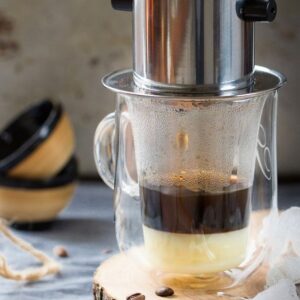
Delicious coffee cup
Discover the Art of Espresso
Although it is just a way of making coffee, when classified, Espresso still stands in a separate section because of its unique characteristics, complexity in preparation and also because of its popularity. This method requires separate roasting, grinding, blending and brewing processes. Today, Espresso has become so popular that if you have never had Espresso, it is equivalent to you have not stepped into the World of Coffee Drinking! So open the door to discover the art of sweet and bitter.
The name Espresso originates from Italy. In Italian, Espresso is called “express”, meaning coffee that can be served to customers immediately. The way to make Espresso is regulated by four M’s: “…Macinazione means the way to grind coffee, Miscela is the coffee blend, Macchina is the coffee machine, and Mano is the skillful hand of the barista…”. Espresso will be perfect if the four “M”s above are done correctly.
1. Blending Espresso: The purpose of blending Espresso is to create a coffee with a special flavor that no single coffee has. The types of coffee commonly used are coffee from Brazil, Mexico, Panama and Peru. Each different type of coffee gives a different flavor, acidity, body and aftertaste.
2. Roasting Espresso: Aroma and sweetness are two important factors of a good cup of Espresso. Therefore, the purpose of roasting Espresso is to retain the aroma and sweetness, as well as to minimize the acidity and bitterness. This can be done by choosing the right finishing time, usually at the first popping period.
3. Grinding Espresso: People often use a burr grinder to grind Espresso. Because when exposed to air, the compounds containing the flavor of coffee are easily lost, the grinding process must take place as quickly as possible. The appropriate grinding time is from 23-28 seconds. In addition, the tools must also be changed daily to avoid the coffee absorbing moisture and taking longer to grind.
4. Making Espresso: Making Espresso is considered an “art”, and the Espresso maker can take this as an opportunity to fully demonstrate his coffee making skills. A perfect cup of Espresso must have a special sweetness and the attractive aroma of freshly ground coffee. The taste of Espresso is both rich and elegant. In addition, a few minutes after drinking, the aroma of coffee still lingers in the palate.
Espressp is the standard coffee brewing method of Italian coffee. Unique and smart. The espresso machine is a true work of art created by Italians. Coffee is brewed at very high pressure. A pump pumps water through a copper coil. The water is rapidly heated in the copper tube system to a temperature of nearly 100°C (not below 90°C). The pressure pushes the water through the coffee powder tightly compressed in a filter. The water flows quickly through the coffee powder, through a metal filter straight into the cup in just a few tens of seconds. The result is a cup of hot, thick and aromatic coffee, yet still not bitter but smooth and light like cream.
To this day, this method of brewing coffee is considered the most superior for the following reasons: Grind the coffee powder for each cup, the coffee retains its aroma better, and the drinker can request to adjust the coffee powder to be coarsely ground, medium ground or finely ground, depending on their preference. The hot water is hot so the aroma of the coffee is extracted at maximum efficiency and does not evaporate. Hot water is quickly passed through, the coffee powder is not burnt so it is not bitter and the amount of caffeine dissolved in the water is not too much as when boiling coffee in water for a longer time. The fine filter can be used, thanks to the high pressure of the water, so there is no cloudiness in the coffee as when gravity is used to push water through the coffee.
Now, with a coffee maker, every cup of espresso in the morning is simple for you.
Although there are differences in brewing methods, the most general and basic principles for a good cup of coffee are still: boiling water, soaking, permeating through the filter and permeating by pressure. Accordingly, no matter which method you choose, you still need to have: good water, no chlorine in the water, pure; temperature from 90-95 degrees Celsius. If the water is not hot enough, the flavors of the coffee will not be fully extracted, making the drink bitter. In addition, the equipment used to brew coffee must be clean.
Espresso is a type of caffeinated coffee made under high pressure to produce about 30ml of coffee in 20 – 30 seconds.
To make a perfect cup of Espresso, many factors and experiences are needed. Below are the factors and experiences to make a perfect cup of Espresso.
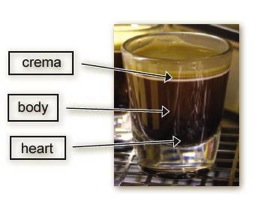
1. Coffee beans
– Coffee beans used to make coffee must be Arabica or mixed with Robusta in the following ratio: 100% Arabica
90 – 10 (90% Arabica – 10% Robusta)
80 – 20 (80% Arabica – 20% Robusta)
2. Coffee bean roasting
– There are 4 roasting types:
Light
Medium
Brown
Dark
– Depending on the region and variety of coffee, there will be a roasting method suitable for that type of coffee.
3. Boiling temperature of water
– The boiling temperature of water must range from 88 – 950C
4. Water pressure: 8 – 9.5 bar +-1
5. Extraction time: 20 – 25 seconds
6. Coffee fineness
– The fineness of the coffee must be suitable for the pressure of the machine to be able to extract in 20 – 25 seconds. This proves that experience in using the grinder is very important. The appropriate fineness of the coffee powder will ensure a delicious cup of coffee with the right time. Adjusting the appropriate fineness is easy to do: if the coffee flows too fast, adjust it to a finer coffee, and if the coffee flows too long, adjust it to a coarser coffee.
7. Amount of coffee: 9gr
8. Compression force: 15 – 20kg
Results:
1. A standard cup of Espresso (including foam) = 25 – 30ml
2. Temperature in the cup is about 670C
3. Color: Golden brown
4. Fine foam on the coffee surface is about 3 – 4mm thick
5. Aroma and taste: Very fragrant, not bitter, sour, fresh, sweet aftertaste…
6. Amount of caffeine: 100mg/cup of 30ml
Factors that make a perfect cup of ESPRESSO
1/ Amount of ground coffee: 6.5g – 8g
2/ Mixing ratio of Robusta/Arabica coffee: Depending on the drinker’s preference.
3/ Extraction time: 25 seconds – 30 seconds
4/ Extracted coffee amount: 25 ml – 30 ml
5/ Coffee machine pressure: 9 bar
6/ Water temperature: 90 degrees.
7/ Coffee pressing force: 15 kg – 25 kg
8/ The most important factor is that the barista, also known as Barista, must have passion and understand the basic principles to create a perfect cup of Espresso.
Collected.