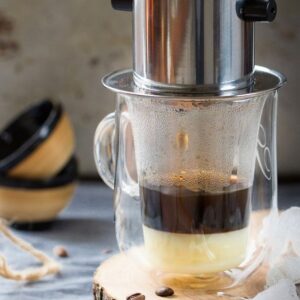
Delicious coffee cup
Grind coffee
The first coffee drinkers ground their coffee with a pestle and mortar, but in the early days people ground coffee with stone mills similar to those used by people in the Middle East to reduce the grains in the powder…
Despite the development of modern technology, there are still four ways to grind coffee. The oldest is the pestle and mortar. Next are stone mills, and slightly more modern are steel serrated edges or corrugated forks. More recently, electric knife grinders operate on the same principle as an electric grinder.
In general, the coffee is ground as finely as possible, without unclogging the filters or turning the coffee into a slurry. The finer the grind, the more the coffee is exposed to hot water, the more quickly and in greater quantities the essential oils in the coffee are released without the accompanying coarser chemicals.
In other words, you don’t need to grind your coffee into a powder, because grinding too finely will lose the essential oils that have been partially evaporated by the heat and friction of the grinding process. You also don’t need to clog your coffee filter or leave your cup full of dregs.
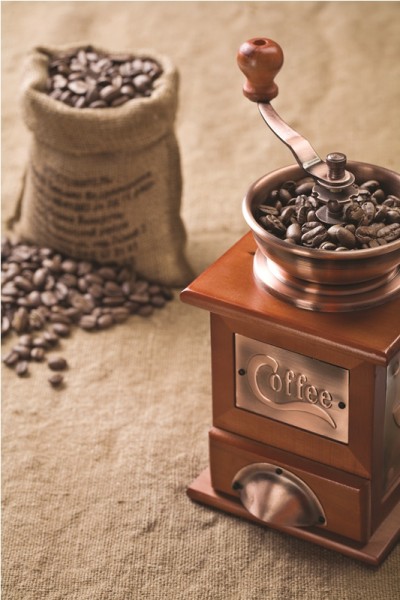
Xay cả phê, xay theo cách truyền thống
The first coffee drinkers ground their coffee with a mortar and pestle, but in the early days they ground coffee with stone mills similar to those used by the Middle East to reduce the grains in the ground coffee. Later, the Turkish coffee grinder was developed, a portable machine that was specially made to be the size and function of a modern pepper mill. The small corrugated metal discs that replaced the mills represented an unprecedented advance in grinding technology. Other machines were developed, including the use of discs in electric motors, but the principle of operation remained the same.
All burr grinders, regardless of price and size, functioned in a similar way. There was a space at the top of the grinder that was used to hold the coffee. When you activate the timer, the coffee automatically flows in at a set amount over a period of time, passing through the serrated edge, which blows the grounds into a removable container at the bottom front of the unit. The timer closes the grinder automatically. These machines produce a more consistent quality of coffee than electric blade grinders, are quieter when grinding, and certainly don’t require manual cranking. However, you will need to clean the crevices after three or four uses (many shops sell brushes for this purpose, a small, hard paint brush is good), and you will need to open the grinder and wash the serrated edge at regular intervals. If you are grinding dark, oily roasts, you will find that the brush alone is not enough, you will need to get all the coffee out of the crevices when you clean. Finally, using a serrated grinder for flavored coffees is not effective. The flavors in the coffee will cling to the saw teeth and affect the unflavored coffee that is ground afterwards.
The main part of the grinder consists of two small corrugated metal discs, or a corrugated metal cone attached to a second concave and similar one. One is fixed and the other rotates by a handle or a motor. The coffee is placed between the corrugated discs, where it is ground until it falls to the bottom of the grinder. This method has never been improved because grinders are always the same in that the adjustment of the distance between the discs can help to regulate the quality of the coffee accurately and consistently.
There are many manufacturers of these small burrs: inexpensive models from Braun, Capresso, Bunn, and others ($40-$60) work well with all brewers except the pneumatic type, which uses pumps or pistons to force hot water through the coffee.
Pneumatic or piston brewers require pneumatic burr grinders that allow you to adjust the quality of the grind to match the pressure used in the brewer. For pneumatic enthusiasts and owners of piston or pump brewers, these sturdy, reliable grinders are essential.
For general coffee lovers, they grind coffee to brew. Most of these grinders are well-built and cost between $100-$300.
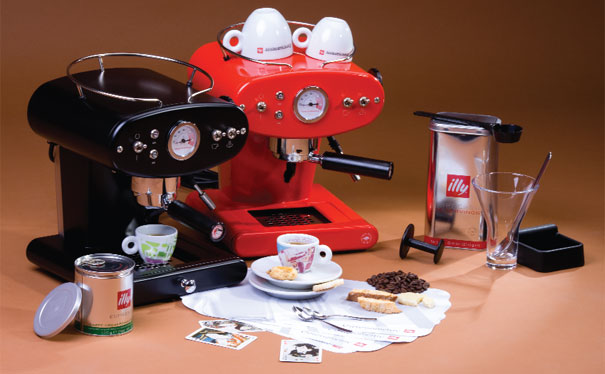
Grinding coffee: sawtooth grinder
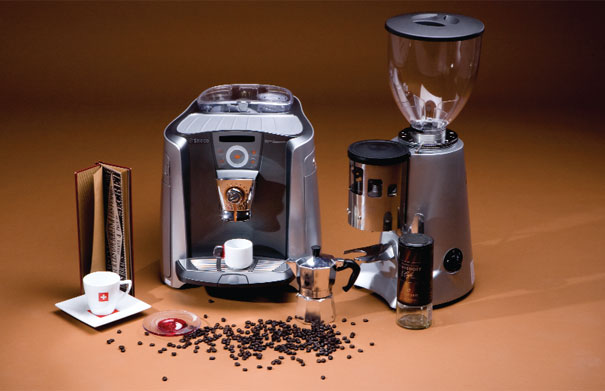
Coffee grinding: electric knife grinder
The third and most recent development in grinding technology is the electric grinder. Two steel blades powered by a small electric motor rotate at high speed at the bottom of a coffee cup-like container and these two blades grind the coffee into small pieces. With the saw method, the quality of the coffee is controlled by adjusting the distance between the two saw teeth, while this method is controlled by the length of time you let the blades hit the coffee. If you do not ensure a systematic timing for the whole process, it will cause what is called little hit and miss.
If you want good coffee ground with an electric knife, spray the coffee and grind every few seconds. It also helps to lighten the bottom of the grinder to bring the freshly ground coffee into contact with the blades.
Disadvantages of electric knife grinders: the inconvenience of knife grinders is above all, they grind less uniformly and are less predictable than saw grinders. Even cheaper burr grinders, if adjusted, produce consistent coffee quality day after day. With burr grinders, only the most attentive and careful are capable of grinding coffee with comparable consistency. With paper filter brewing, small discrepancies are not a concern. With piston brewing, filterless drip, pot contact, and pneumatic brewing, all of these methods require a higher degree of coffee consistency to achieve high quality. Those who want predictable coffee quality should choose burr grinders such as Capresso, Braun, Bunn, and Pavoni.
A knife grinder also cannot produce a Turkish or Middle Eastern style ground coffee, for this you need a good hand grinder like a Zassenhaaus or one of those custom Turkish hand grinders that look like a large pepper mill. Electric grinders use compressed air for Middle Eastern coffee.
Another disadvantage of this type of grinder is that it is difficult to get the coffee from the bottom of the knife and into the brewing device, you also have problems cleaning the grinder.
Advantages of a knife grinder: The advantages can be summarized as follows: cheap, fast grinding and does not take up much space in the kitchen. You can use it to grind other beans and similar cooking ingredients, unlike a saw grinder, it can be used for flavored coffee.
Collected.